

As we take a seat to play roulette or spin a slot machine from a café in Lyon or a home in Bordeaux, the unseen framework protecting our money and data hardly ever comes to mind. Yet that architecture dictates whether an evening’s entertainment remains secure or turns into a risk. We have studied the security frameworks powering modern platforms like Aphrodite Casino, and what we discovered calls for a comprehensive discussion. This guide unpacks the seven critical layers of protection that separate trustworthy operators from others, offering French players a clear lens to judge any gaming site they come across.
Encryption Protocols and Data Transmission
The initial line of protection on any reputable casino homepage is the encryption layer that obfuscates information between your device and the provider’s servers. We are speaking about Transport Layer Security, the successor to SSL, which establishes an impenetrable tunnel for every password, payment detail, and personal document you send. When you browse a platform like Aphrodite Casino, your browser executes a split-second handshake with the server, agreeing on cipher suites that would take classical computers billions of years to decrypt. This is not optional decoration; it is the cornerstone of digital trust.
We always verify that a casino implements TLS 1.3, the most modern standard, which removes outdated cryptographic algorithms exposed to downgrade attacks. Older protocols like TLS 1.0 and 1.1 possess known weaknesses that sophisticated attackers can leverage through man-in-the-middle interceptions. French players should look for the padlock icon in their address bar and click it to review the certificate issuer. Reputable platforms use certificates from authorities like DigiCert or Let’s Encrypt with full organisation validation, not just domain validation, which provides an additional layer of identity confirmation.
Beyond the basic encryption, forward secrecy warrants attention because it ensures that even if a server’s private key is compromised in the future, past sessions cannot be retroactively decoded. We have observed that the strongest operators configure their servers to prefer elliptic curve Diffie-Hellman key exchanges, which accomplish forward secrecy efficiently. This is significant enormously in France, where financial transactions fall under strict GDPR protections, and any data breach carries severe legal consequences for the operator as well as personal risk for the player.
What we find comforting is the growing adoption of HTTP Strict Transport Security headers, which direct browsers to never connect via unencrypted HTTP. This blocks SSL stripping attacks where a malicious actor on public Wi-Fi compels a downgrade to plain text. When we test casino sites from Parisian co-working spaces or hotel networks, we actively monitor for these headers. The absence of HSTS is a red flag we cannot dismiss, regardless of how polished the game lobby appears. Every modern casino homepage must enforce encryption relentlessly, and the best ones do so by default.
Fairness and RNG
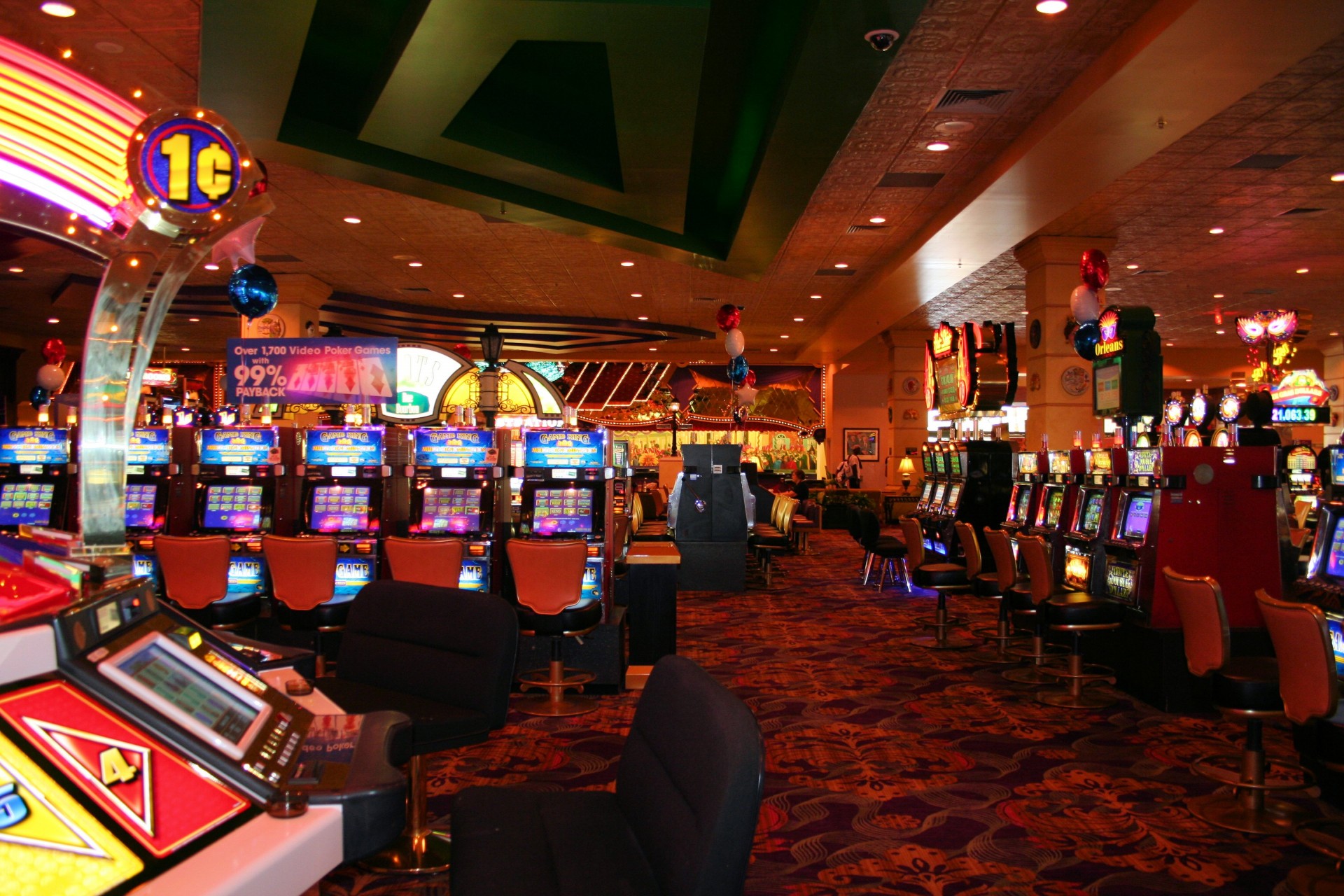
Underlying every slot spin and card drawn lies a random number generator whose integrity determines whether the game is fair or fundamentally rigged. We distinguish between pseudo-random number generators, which use mathematical algorithms initialized with truly random inputs, and hardware random number generators that measure physical phenomena like atmospheric noise. Both can be secure when properly implemented, but both require rigorous external validation. The RNG must produce sequences that pass statistical tests for non-predictability, uniform distribution, and no discernible patterns.
We have examined the testing methodologies employed by the major laboratories, and they are genuinely noteworthy in their depth. Tests like the NIST Statistical Test Suite verify for monobit frequency, runs, and spectral characteristics that would detect a weak generator. For live dealer games transmitted from studios, the integrity question moves from software to physical security. Cameras must monitor every angle without blind spots, cards must be changed frequently, and shuffling procedures must be visible and verifiable. The best live casino setups stream continuous feeds that players can scrutinise in real time.
Return to player percentages present another perspective into game integrity, though they need careful analysis. A slot with 96 percent RTP does not indicate you will forfeit exactly four percent of your session bankroll; it describes the theoretical long-term average across millions of spins. We confirm that published RTP figures match the actual configuration files running on the server, which reputable operators allow testing labs to validate. Some jurisdictions mandate that RTP ranges be presented, such as when a game can operate at different settings selected by the operator.
Provably fair technology represents the most radical transparency innovation we have come across, primarily in the cryptocurrency casino space. This system allows players check each game outcome independently using cryptographic hashes, without requiring to trust the operator’s word or a third-party audit. Before a round commences, the server publishes a hashed seed. After the round, the player gets the unhashed seed and can mathematically verify the result was pre-set and unmanipulated. While not yet standard in mainstream French-facing platforms, we foresee this technology to expand as players request greater verifiability.
Safe Gambling Instruments as Safety Framework
We frame responsible gambling features not like paternalistic restrictions but as essential security tools that protect players from the biggest risk: lack of control over their own behaviour. Deposit limits, when configured properly, function as circuit breakers that avert catastrophic financial decisions made in moments of tilt or drunkenness. The optimal configurations let players to set daily, weekly, and monthly caps that cannot be lifted without a cooling-off period, generally twenty-four to seventy-two hours. This delay provides space for logical thinking.
Session time reminders and reality checks serve a different but supplementary purpose. After a configurable interval, commonly between thirty minutes and two hours, a pop-up interrupts play to show elapsed time, amount staked, and overall result. We have encountered research indicating that these interruptions significantly reduce the intensity of play and boost decision quality. French operators licensed by the ANJ are required to offer these tools, but the calibre of implementation varies enormously. The top implementations are impossible to dismiss with a single click and necessitate active acknowledgment.
Self-exclusion constitutes the most powerful tool in this category, enabling players to voluntarily ban themselves from the platform for a picked timeframe extending from six months to lifetime exclusion. We highlight that self-exclusion must be comprehensive and permanent during the exclusion period. When we test this feature, we confirm that marketing emails cease, that account reactivation is truly impossible, and that sister sites under the same licence also honour the exclusion. Half-measures in self-exclusion are worse than useless; they create a false sense of security.
We also analyse how operators manage the convergence of responsible gambling and data privacy. Usage pattern monitoring that spots potential problem gambling behaviours must be conducted with rigorous anonymisation protocols. Players deserve guarantees that their playing habits, though examined for protective purposes, will never be disclosed with third parties or employed for targeted marketing during risky periods. The General Data Protection Regulation grants French players with robust protections in this area, like the right to view any automated decisions rendered about their behaviour.
User Verification and Entry Management
Your password by itself is not enough to secure an account containing real money, and the market has eventually adopted this truth. Multi-factor authentication has moved from a nice-to-have to a necessary norm, and we commend every platform that applies it carefully. The idea is simple: logging into your account requires something you remember, like a password, plus something you own, such as a one-time code produced by an authenticator app or transmitted via SMS. This double demand stops credential-stuffing attacks where hackers attempt username and password combinations leaked from other incidents.
We favor time-based one-time password systems like Google Authenticator or Authy over SMS-based verification, because SIM swapping attacks have turned worryingly widespread across Europe. A resolute attacker can convince a mobile carrier to transfer your phone number to their device, capturing text messages and bypassing weak two-factor setups. App-based tokens are tied to your physical device, not your phone number, making them invulnerable to this threat. The best casino platforms support multiple authentication methods and let players select their chosen balance of convenience and security.
Session management is another aspect we examine closely. After logging in, how long does your session remain active before automatic timeout? We have seen operators that keep sessions open indefinitely, establishing a window of vulnerability if you walk off from a shared computer in a French internet café or fail to log out on a hotel business centre terminal. Responsible platforms apply idle timeouts, typically between fifteen and thirty minutes, after which re-authentication is mandatory. This simple measure has prevented countless account takeovers.
Login notification systems provide yet another defensive layer that we appreciate highly. When a casino dispatches an email or push notification notifying you to a new login from an unknown device or location, you obtain the power to respond immediately to unauthorised access. If you get such an alert while sitting at home in Marseille and the login came from another country, you can contact support and freeze the account before any damage takes place. We urge every player to enable these notifications wherever offered.
Transaction Handling and Monetary Protections
The instant money flows between your bank and a casino account, several protective measures must function in unison to protect the transaction. Payment Card Industry Data Security Standard compliance regulates how card numbers are managed, stored, and transmitted. We search for operators that never store full card details on their own servers, instead relying on tokenisation where a meaningless string substitutes for your actual card number. This way, even if a database is breached, the attackers acquire useless tokens rather than usable financial credentials.
For French players, the variety of supported payment methods shows local preferences and possesses distinct security implications. Carte Bancaire transactions gain from the robust 3D Secure protocol, now at version 2.0, which adds a biometric or passcode confirmation step handled directly by your bank. E-wallets like PayPal and Skrill serve as intermediaries, meaning the casino never accesses your bank account details at all. We consider e-wallets the most privacy-preserving option, though they may generate small fees that bank transfers avoid.
Cryptocurrency payments present a different security model entirely, one based on blockchain verification rather than institutional guarantees. When a casino accepts Bitcoin or Ethereum, transactions become irreversible and pseudonymous, eliminating chargeback fraud but also taking away the safety net of bank dispute resolution. We have seen operators use multi-signature wallets that require multiple private keys to approve withdrawals, preventing any single compromised employee from siphoning funds. This is sophisticated security that demands equally sophisticated user caution.
Withdrawal processing times show much about an operator’s internal controls. When we see instant or same-day withdrawals, it points to automated verification systems that can validate identity and payment method ownership without manual intervention. Longer delays often point to manual reviews, which are not inherently suspicious but should be clearly communicated. The typical range for e-wallet withdrawals ranges from instant to twenty-four hours, while bank transfers may take three to five business days. Any deviation from these norms warrants a direct question to customer support about the reason for the delay.
Regulatory Licensing and Compliance Audits
No amount of technical wizardry substitutes for the core importance of a real gambling license from a respected jurisdiction. For French players, the most pertinent authority remains the Autorité Nationale des Jeux, which oversees all legal online gambling within France’s borders. However, many international platforms functioning under European mutual recognition hold licenses from the Malta Gaming Authority or the Gibraltar Gambling Commissioner. We scrutinise these licences because they impose mandatory security audits that unlicensed operators never undergo.
The ANJ demands operators to submit their random number generators to certified testing laboratories that validate statistical fairness. These labs, including names like Gaming Laboratories International and iTech Labs, run millions of simulated game rounds to ensure that outcomes match the theoretical return to player percentages displayed on the site. We have reviewed audit certificates that specify exactly which games were tested and when the certification expires. A transparent operator like Aphrodite Casino makes these certificates available directly from the footer of the homepage, not buried behind a dozen clicks.
Compliance extends far beyond game fairness into anti-money laundering protocols that influence every player. Licensed casinos must confirm customer identities through know-your-customer procedures that typically require a government ID, proof of address, and sometimes a source of funds declaration for larger deposits. We appreciate this can feel intrusive, but it fulfills a critical protective function. These checks prevent criminal actors from using gambling platforms to clean illicit money, which in turn maintains the entire player community safer from association with financial crime.
We also pay close attention to the segregation of player funds, a requirement that many regulators apply strictly. This means your account balance is held in a separate bank account, protected from the company’s operational capital. Should the operator face insolvency, those segregated funds remain legally yours and cannot be seized by creditors. French banking law and MGA regulations both mandate this separation, and we consider it non-negotiable for any casino we would recommend. Always verify this protection exists before depositing significant sums.
Smartphone Safety and Cross-Platform Safety
The shift to mobile gaming has introduced security considerations that desktop-focused analysis often ignores. Smartphones feature biometric sensors that, when properly integrated, deliver authentication stronger than any password. Fingerprint recognition and facial recognition, powered by the secure enclave processors in modern devices, tie account access to your physical presence. We have examined casino mobile apps and responsive websites that harness these capabilities, and the experience is both faster and more secure than typing credentials on a small touchscreen.
Application security gains heightened importance when software runs natively on your device rather than in a browser sandbox. Legitimate casino apps distributed through official stores like Google Play and the Apple App Store pass review processes that detect malware, excessive permissions, and privacy violations. We warmly warn against downloading casino APK files directly from websites, as these evade all store protections and can harbor keyloggers, screen recorders, or worse. Even when an operator like Aphrodite Casino provides a direct download, we advise verifying the file hash against a published value.
Unsecured wireless networks represent a security risk that mobile gamers face frequently in French cities, where café and station hotspots are commonplace. We consistently recommend using a trustworthy virtual private network when gambling on public connections, even when the casino’s encryption is robust. A VPN creates an additional tunnel that prevents network operators from even detecting which sites you visit, not to mention capturing data. Some casinos flag VPN traffic as dubious, which is a justifiable anti-fraud measure, but the top ones differentiate between privacy-seeking players and location spoofers.
Cross-device session continuity should be managed with security in mind. When you initiate a gaming session on your laptop in Nice and proceed on your phone while using the tram, the transition should require re-authentication on the new device. We have noted implementations where session tokens transfer effortlessly without verification, introducing a vulnerability if someone gains brief physical access to one of your devices. The perfect flow preserves convenience while adding friction at the exact point where a security boundary is crossed.
Biometric Verification in Practice
We have delved deeper into how biometric data is saved and handled, because the line between local and cloud storage involves massive privacy consequences. Apple’s Face ID and Touch ID systems keep biometric templates only in the Secure Enclave, a dedicated processor physically secluded from the main operating system. When a casino app requests biometric authentication, it receives only a yes or no response, never the raw biometric data. Android devices with equivalent hardware security modules offer similar guarantees. We verify that apps use these native APIs rather than employing custom biometric capture, which could reveal sensitive data.
Breach Management and Player Recourse
Protection is not a static achievement but an continuous effort that must include robust plans for when things go wrong. We assess how operators handle security incidents because their handling demonstrates more about their real commitments than any marketing claim. A responsible platform releases a explicit security disclosure framework, welcoming security researchers to disclose vulnerabilities without fear of legal retaliation. Bug bounty programs, where external experts are paid for discovering weaknesses, indicate a mature security culture that embraces examination rather than avoiding it.
Data breach notification procedures are governed by GDPR requirements that are directly applicable to French players. If personal data is breached, the operator must alert the relevant supervisory authority within seventy-two hours and contact directly with affected users when the breach constitutes a high risk. We seek out operators that go beyond legal minimums by delivering clear incident reviews explaining what happened, what data was compromised, and what steps stop future incidents. Silence after an incident is the worst possible response and erodes trust permanently.
Customer support standard acts as a security mechanism by itself. When you suspect unauthorised account activity, the swiftness and competence of the response team determines whether losses can be avoided or reversed. We evaluate support channels by replicating security concerns and tracking response times, knowledge levels, and escalation procedures. Live chat that links to a human within two minutes, supplemented by phone support during European business hours, embodies the standard we require. Email-only support with twenty-four-hour response times is insufficient for security emergencies.
Dispute resolution routes furnish the final safety net when all other measures fail. Licensed operators have to offer access to independent alternative dispute resolution bodies, such as eCOGRA or the Malta Gaming Authority’s player support unit. These organisations can look into complaints about withheld withdrawals, unfair game outcomes, or security lapses, and their rulings are binding on the operator. French players also retain the right to seek redress through the French court system for operators targeting the French market, though this is a slower and more expensive route that we wish remains unnecessary.
We finish with a certainty formed through exhaustive examination: modern casino security is a multi-layered discipline that functions best when players interact actively with the tools supplied. Strong encryption, genuine licensing, multi-factor authentication, audited game integrity, responsible gambling controls, mobile-specific protections, and transparent incident response unite to create an environment where entertainment does not come at the cost of safety. Our suggestion is to approach every platform with informed analysis, verify the security claims made on its homepage against independent sources, and never sacrifice on the protections that maintain your money and identity secure. The technology is present, the regulations demand it, and the best operators offer it. Your role is to identify and require upon nothing less.